Saturday, December 25, 2010

Eyewitness Report: Our Side of the Story

Jefferson Davis, President of the C.S.A.

This is the last in a series of articles featured on the Political Spectrum as part of Secession Week.

The object of this work has been from historical data to show that the Southern States had rightfully the power to withdraw from a Union into which they had, as sovereign communities, voluntarily entered; that the denial of that right was a violation of the letter and spirit of the compact between the States; and that the war waged by the Federal Government against the seceding States was in disregard of the limitations of the Constitution, and destructive of the principles of the Declaration of Independence.

The author, from his official position, may claim to have known much of the motives and acts of his countrymen immediately before and during the war of 1861-'65, and he has sought to furnish material far the future historian, who, when the passions and prejudices of the day shall have given place to reason and sober thought, may, better than a contemporary, investigate the causes, conduct, and results of the war.

The incentive to undertake the work now offered to the public was the desire to correct misapprehensions created by industriously circulated misrepresentations as to the acts and purposes of the people and the General Government of the Confederate States. By the reiteration of such unappropriate terms as "rebellion" and "treason," and the asseveration that the South was levying war against the United States, those ignorant of the nature of the Union, and of the reserved powers of the States, have been led to believe that the Confederate States were in the condition of revolted provinces, and that the United States were forced to resort to arms for the preservation of their existence. To those who knew that the Union was formed for specific enumerated purposes, and that the States had never surrendered their sovereignty it was a palpable absurdity to apply to them, or to their citizens when obeying their mandates, the terms "rebellion" and "treason"; and, further, it is shown in the following pages that the Confederate States, so far from making war or seeking to destroy the United States, as soon as they had an official organ, strove earnestly, by peaceful recognition, to equitably adjust all questions growing out of the separation from their late associates.

Another great perversion of truth has been the arraignment of the men who participated in the formation of the Confederacy and who bore arms in its defense, as the instigators of a controversy leading to disunion. Sectional issues appear conspicuously in the debates of the Convention which framed the Federal Constitution, and its many compromises were designed to secure an equilibrium between the sections, and to preserve the interests as well as the liberties of the several States. African servitude at that time was not confined to a section, but was numerically greater in the South than in the North, with a tendency to its continuance in the former and cessation in the latter. It therefore thus early presents itself as a disturbing element, and the provisions of the Constitution, which were known to be necessary for its adoption, bound all the States to recognize and protect that species of property. When at a subsequent period there arose in the Northern States an antislavery agitation, it was a harmless and scarcely noticed movement until political demagogues seized upon it as a means to acquire power. Had it been left to pseudo-philanthropists and fanatics, most zealous where least informed, it never could have shaken the foundations of the Union and have incited one section to carry fire and sword into the other. That the agitation was political in its character, and was clearly developed as early as 1803, it is believed has been established in these pages. To preserve a sectional equilibrium and to maintain the equality of the States was the effort on one side, to acquire empire was the manifest purpose on the other. This struggle began before the men of the Confederacy were born; how it arose and how it progressed it has been attempted briefly to show. Its last stage was on the question of territorial governments; and, if in this work it has not been demonstrated that the position of the South was justified by the Constitution and the equal rights of the people of all the States, it must be because the author has failed to present the subject with a sufficient degree of force and clearness.

In describing the events of the war, space has not permitted, and the loss of both books and papers has prevented, the notice of very many entitled to consideration, as well for the humanity as the gallantry of our men in the unequal combats they fought. These numerous omissions, it is satisfactory to know, the official reports made at the time and the subsequent contributions which have been and are being published by the actors, will supply more fully and graphically than could have been done in this work.

Usurpations of the Federal Government have been presented, not in a spirit of hostility, but as a warning to the people against the dangers by which their liberties are beset. When the war ceased, the pretext on which it had been waged could no longer be alleged. The emancipation proclamation of Mr. Lincoln, which, when it was issued, he humorously admitted to be a nullity, had acquired validity by the action of the highest authority known to our institutions—the people assembled in their several State Conventions. The soldiers of the Confederacy had laid down their arms, had in good faith pledged themselves to abstain from further hostile operations, and had peacefully dispersed to their homes; there could not, then, have been further dread of them by the Government of the United States.

The plea of necessity could, therefore, no longer exist for hostile demonstration against the people and States of the deceased Confederacy. Did vengeance, which stops at the grave, subside? Did real peace and the restoration of the States to their former rights and positions follow, as was promised on the restoration of the Union? Let the recital of the invasion of the reserved powers of the States, or the people, and the perversion of the republican form of government guaranteed to each State by the Constitution, answer the question. For the deplorable fact of the war, for the cruel manner in which it was waged, for the sad physical and yet sadder moral results it produced, the reader of these pages, I hope, will admit that the South, in the forum of conscience, stands fully acquitted.

Much of the past is irremediable; the best hope for a restoration in the future to the pristine purity and fraternity of the Union, rests on the opinions and character of the men who are to succeed this generation: that they maybe suited to that blessed work, one, whose public course is ended, invokes them to draw their creed from the fountains of our political history, rather than from the lower stream, polluted as it has been by self-seeking place-hunters and by sectional strife.

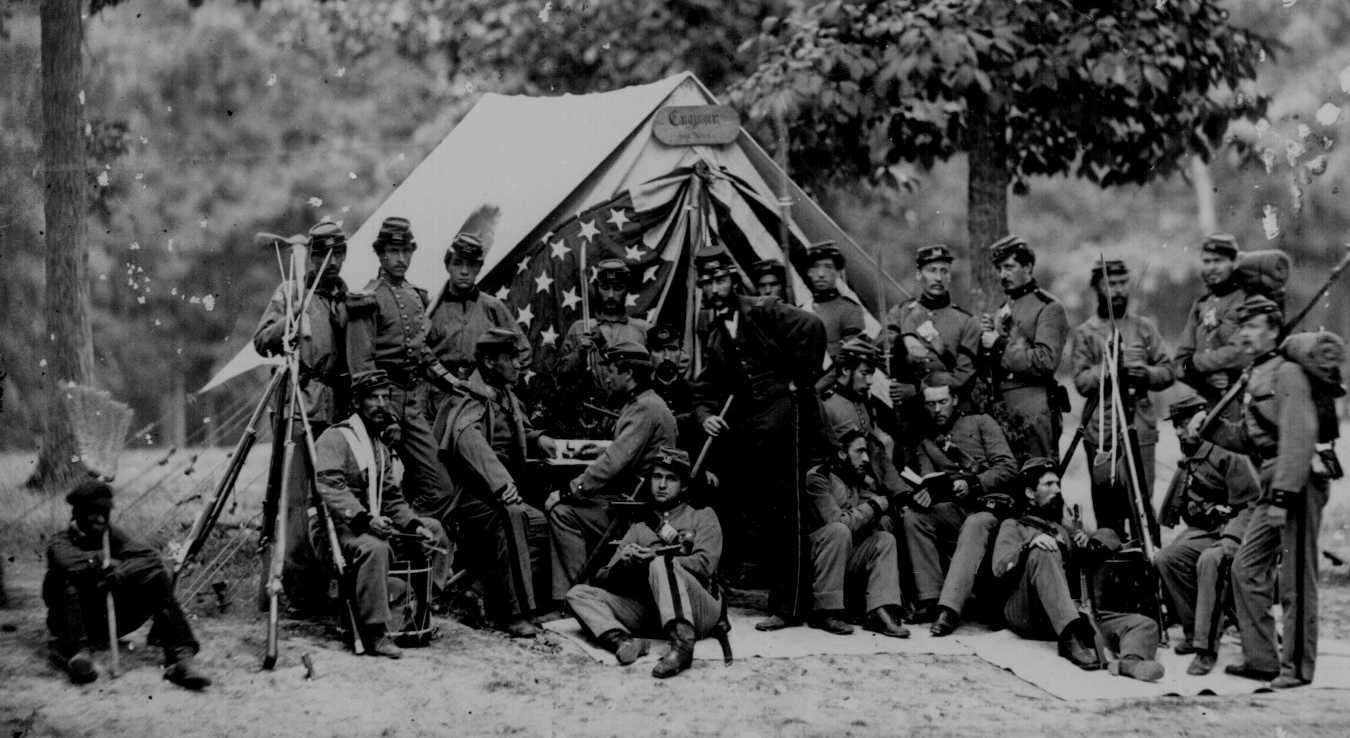
From The Rise and Fall of the Confederate Government by Jefferson Davis
Image used courtesy of wtps.org.

Zach Foster: On the Confederate Flag, Part 4


A selection from “On the Confederate Flag” 2nd Edition, December 2010
By Zach Foster

This is one in a series of articles being featured on the Political Spectrum as part of Secession Week.


Let us forgive!

The smoothest way for Americans to forgive secession and the cause of the Civil War, since many Americans still haven’t gotten over it, is to clearly see and accept the opposition’s reasons, whether one agrees with them or not.  Political correctness, though it for the most part makes life better for people of different backgrounds, can occasionally do harm.  There were mistakes made on both sides of the political struggle preceding the war and Americans need to accept this.  It was the South’s mistake for abandoning diplomacy and for abandoning the Union, but it is also the North’s fault for rigidly refusing to appeal to Southern political and economic needs.

Though it was the South’s attempt to form a foreign nation, they were defeated and brought back into the Union.  The Civil War has been over for 145 years, yet Americans still feel resentment towards one side or another.  When people think of the Civil War, they think of blue and gray, or of slavery and freedom.  What many fail to think of is whom a civil war involves—one people, fathers and sons, brothers and friends—killing each other.  Most of the military leaders in the Civil War, both Union and Confederate, were old friends and classmates from military school, and the members of the Congress were former colleagues.  It is difficult for people to imagine going to war against half of their own high school graduating class.  It is doubtful as to whether any American has ever pulled the old High School yearbook from his shelf, opened it up to the pictures and said to himself, Someday there will be a Civil War and I’m going to have to kill him, him, him, and many others because our beliefs differ.  This is what happened to America and this is the reason why Americans need to forgive.

There is a compelling argument in The Politically Incorrect Guide to the Civil War explaining how Secession was more legal than the American Revolution.  Regardless of its argued legitimacy, the Confederate States of America was a movement of Southern people.  Nonetheless, those Southerners were Americans, born of the same nation as their Northern counterparts.  Yes, the South tried to secede, but it failed.  Yes, the North invaded and burned the Southern states into submission, but the same Southern culture and traditions have survived since those states were readmitted into the Union.  It seems as if some intellectual schools of die-hard Southerners have been sore losers and, even worse, their die-hard Northern counterparts have been sore winners!

It was the revered hero Abraham Lincoln whose vision of reconstruction was “malice toward none; with charity toward all... to bind up the nation's wounds.”  Tragically, the South lost its best post-war friend when Lincoln was assassinated.  Reconstruction occurred, though not according to Lincoln’s plan.  The vengeful Northern politicians and military governors imposed a punitive system of Reconstruction which failed to reinstate patriotism toward the Union among the spiteful Southern population.  Reconstruction failed to rebuild the Southern infrastructure, failed to educate the emancipated slaves who lacked many skills after a lifetime of servitude (an issue faced today by many North Korean defectors living in the South), and it succeeded only in driving people apart.  This failed form of Reconstruction gave rise to the oppressive Jim Crow system.

Americans need to acknowledge that the Civil War is physically over, but that the division still exists today.  All Americans need to extend a hand of brotherhood to other Americans whether their ideologies agree or not.  Southerners today (with the exception of hate groups and neo-secessionist movements which are few in number) may wave the Confederate flag, but they are loyal to the United States of America.

Let their heritage be honored

Unlike other civil wars, the veterans of the losing side of this country’s civil war were not severely punished.  Other wars such as the Chinese Civil War saw the losing side driven from the mainland and forced to settle on a small island to avoid violent persecution, with horrid persecution of those left behind.  The Vietnam War saw a sloppy evacuation of Saigon by helicopter, followed by ten years of refugees fleeing from imprisonment and execution.  This did not happen after the American Civil War, nor was it the objective of either side.  The Federal objective in the war was to preserve the Union.  This objective was carried out successfully.

Still, there are Southerners who speak out against the “tyranny” of the United States government circa 1860.  These individuals are being just as misinformed and overly dramatic as those on the other side of the debate, crying that the flag is a constant reminder of hatred and oppression.  These two extremes are reactionary stances and both are counterproductive.  All sides are guilty, and Americans need to accept this and put the past behind them as they look forward to bind those wounds that never healed.

Some people have tried to move on.  The Northern veterans of the Civil War have received the national and historical accreditation that they deserve.  Southerners have received only local honors by their descendants until groups like the Sons of Confederate Veterans emerged nationally.  Just as Southerners need to forgive the United States Armed Forces, the armed forces whom many Southern sons and daughters serve, the rest of the American population needs to forgive and honor the Confederate Veterans who suffered the loss of a war and public scorn similar to that which burdened the Veterans of the Vietnam War.  In later decades, Confederate veterans were given pensions by their state of residency.  To this pension system, the Federal government did not object or intervene.  In all parts of the country, regardless of which side they belonged to, the government acknowledged veterans of the American Civil War.

Moving beyond politics, it’s interesting to note how both flags of the Civil War have moved on from being symbols of war and politics to finding a place as pop-culture symbols.  There are many rock and country music groups that have adopted these flags into their album artwork and merchandise.  There are also many stores, including Army surplus, where people can easily buy both flags to own or display.

The Confederacy has also established a legacy in history and folklore, with Robert E. Lee arguably becoming the most revered man in Southern history.  Several other Confederate leaders have lived on as well.  To this day, some of the U.S. Army’s most famous military bases where elite soldiers are trained are named after Confederate generals Braxton Bragg, John Bell Hood, A.P. Hill, and Robert E. Lee.  This legacy is acceptable, since a great many other military bases are named for Northern military leaders.

On the appropriateness of flying the Confederate flag

The Confederate flag, though it is a symbol of the history and culture of the American South, is not a political flag—it is a symbolic one.  There are only two instances in which it should be appropriate to fly the rebel flag in public places.  The first instance is for memorial services for fallen ancestors, or for the graves of Confederate dead.  The second instance is for historical context, such as the flag’s use in battle re-enactments, museums, battle sites, or important Southern anniversaries.
Though instances exist in which flying the rebel flag can be appropriate, by no means should the flag fly above Old Glory or any other version of the US flag.  Furthermore, the rebel flag should not be flown over government buildings.  There was a hot national issue in 2007 regarding the rebel flag being flown over the South Carolina State Capitol building.  Though photographs indicate that the rebel flag was below the United States flag, it was incorrect to fly a secessionist flag over a government building of a US state.

It is appropriate to fly the flag over monuments to Confederate veterans, since they represented their communities and their states which happened to have seceded at the time.  It is also highly appropriate to fly the rebel flag on private property in observance of the First Amendment.

Another topic of debate is the appropriateness of the rebel flags flying over the graves of Confederate military dead.  This is acceptable and practical, since the rebel soldiers fought and died for that flag.  They are entitled to their desired flag over their gravesites.  This courtesy is an American military tradition.  During World War II, when German prisoners died in stateside captivity or in escape attempts, the US Army would give those POWs proper military burials, including religious benediction and their coffin being draped with the red flag with the swastika.  During the Cold War, Soviet soldiers would occasionally die in air or submarine espionage missions.  If their bodies were retrieved, they were given their own burial rights, including benediction by Russian Orthodox priests and their coffins being draped with the red Soviet flag with the hammer and sickle.  By these standards, the American rebels—our brothers—ought to be allowed their rebel flags at their graves.

For any ceremonial instances that are not historically oriented in which the Confederate flag must be displayed, one format is appropriate.  Such a format is to fly the United States flag highest, followed by the corresponding state flag, and then the rebel flag.  For this order to be changed deliberately and out of historical or cultural context would be a symbolic challenge to US sovereignty, and possibly a violation reaching beyond the protection of the First Amendment.

Moving On

The United States is a diverse and multicultural country.  Though the Civil War has been long over, it continues to divide Americans.  It is only with the understanding of the evolution of the meaning of the Confederate flag that Americans can accept it as a reminder of the lost cause of secession, and of the deaths of hundreds of thousands over differences in ideology.  The flag itself is just a symbol now of things that may have been, but never were.  The days when terrorists brutalized Southern blacks while waving the flag are long gone. The rebel flag hates no more than the person waving it, and so it should not be regarded as a symbol of hate.
The Civil War was fought because people abandoned diplomacy and turned prematurely to settling their disputes with weapons.  People are guilty on both sides, and only through understanding this can Americans take up the responsibility of binding the country’s wounds and healing.  It is our responsibility as Americans, regardless of regional background and pride, to educate ourselves and each other, to understand each other, and to love each other both in the common history and traditions we share and in the wonderful differences which broaden our horizons.  “…malice toward none; with charity toward all…”

For further reading

On secession, the Civil War, and Reconstruction
The Civil War: A History, by Harry Hansen, Signet Classics, 2002
Time: Abraham Lincoln-An illustrated history of his life and times, Time Inc. Home Entertainment, 2009
The Politically Incorrect Guide to the Civil War, by H.W. Crocker III, Regnery Press, 2008

On Native American Confederates
p. 101-102 “The Battle of Pea Ridge,” The Civil War: A History, by Harry Hansen, Signet Classics, 2002
“Native Americans in the Civil War,” NativeAmericans.com,
http://www.nativeamericans.com/CivilWar.htm
Red Fox: Stand Watie and the Confederate Indian Nations During the Civil War Years in Indian Territory, by Wilfred Knight, Arthur H. Clark Publishing, 1987
General Stand Watie’s Confederate Indians, by Frank Cunningham, University of Oklahoma Press, 1998

On Black Confederates
Black Southerners in Gray: Essays on Afro-Americans in Confederate Armies, edited by Richard Rollins, Rank and File Publications, 1994
Black Confederates, Edited by Charles Kelly Barrow, J.H. Segars, and R.B. Rosenburg, Pelican Publishing, 2001
Southern Heritage 411, http://www.southernheritage411.com/

On H.K. Edgerton
“A Divisive Flag Makes it to D.C.,” by Brian McKenzie, 2009, http://www.southernheritage411.com/hke.php?nw=301

On Hispanic Confederates
Hispanic Confederates, by John O’Donnell-Rosales, Clearfield Company, 1997
A Life Crossing Borders: Memoirs of a Mexican-American Confederate, by Santiago Tafolla, Arte Publico Press, 2009

About the author

Zach Foster lives with his family in southern California.  He is currently working towards earning degrees in Political Science and U.S. History and proudly serves as a Sergeant in the California State Military Reserve.  He currently writes for American Heroes Press and the Political Spectrum (http://political-spectrum.blogspot.com) and aspires to one day run for Congress.  His ancestry traces back to both sides of the Civil War.

T-shirst image used courtesy of Matchtingtracksuits.com. Cherokee image used courtesy of inc-art.com. Crossed flags image used courtesy of Sodahead.com. They are included via fair use and the propertyy of their respective owners, not the article author.

Eyewitness Report: Black Confederate Soldiers

Excerpts from The "Slave Narratives"
This is one in a series of articles featured on the Political Spectrum as part of Secession Week.

86% of the 2,300 former slaves that were interviewed in the 1930s had positive things to say about their masters and/or slavery.

Frank Childress, 85, Mississippi
"Yassuh, I'se the one what fought on both sides," he claims proudly, "but I neber fought for de Yankees till dey captured me and put me in a corral and said, 'Nigger, you fought for de South; now you can fight for de North."

Blewitt, Peter 87, Mississippi
"I went to war with my master---Henry Blewitt---to look after his hoss. I was with my old marsta at Vicksburg. I had charge of five horses dere and had to keep dem hid under a cliff. Old Masta and my father was both killed in the Vicksburg siege. They was fighting down close to de river just before de battle was ovah. I was back at de camp wid de hosses. After dat I went back to Old Miss, with Capt. Stephens who lived in Newton County. After de war I stayed on wid old Mistess until 1872. Old Miss had three chillun: Betsy, Willie and Henry. I nussed all dem chilluns, and worked 'round de house. I attended to de stock and milked de cows. Nearly all Old Miss's slaves stayed on wid her atter de war was over. She was good to us and we didn't have no udder place to go. We's satisfied dere, and stayed wid her till she sold out and went to Californy.

Boggan, Manda 1847, Mississippi
"I believes I had de bes' master in de worl'. I gits ter thinkin' ob de days back in slavery time an' wishes ole Mars could ev alwa's cared fo' us. He was a preacher an' sho' did live his religion, an' taught us slaves ter walk in de straight an' narrow way. He wouldn't 'low no overseers wukin' his slaves, 'cause he wont gwine ter hab 'em beat. He got wuk a plinty out 'en us, fer when yo' turn a bunch ob niggers a loose an' let 'em sing, pray, an' shout all dey wants ter he's sho' gwine ter turn de wuk off.

Bohanon, Georganna 104, Mississippi
I worked awful hard when I wus growing up but I is too ole to remember anything about back yonder and my folks wus allus good to me and I wish I had stayed a slave.

Brewer, Wiley 103, Mississippi
"Yas'm, I went to de war. Marster took me wid him, and I fit, too, I killed a thousand Yankees... You look like you don't believe dat, Miss, but it's de truth. Mistis always told me to tell the truth, and I ain't never told nobody no lies. Some ub dem Yankees I shot and some uv 'em I drowned. Marster always told me Yankees was de worst friends I had, so when dey come round after de war telling me de Government was gonna give us 40 acres and a mule, I knowed it wan't so and went back to Marster. He let me work for him, part de time as wage hand and part as sharecropper till he died. I saved my money and bought me a mule, and en about 32 years ago I bought me a farm. Dat's where me and my wife lives now, just a few miles from Columbus. I calls my house 'Rasling Jacob'.

Bell, Bettie Massingale, Alabama,
"Yer sees, young marster, Marster John Massingale was sho' good to his slaves. He gib each slave wid a fam'ly a sep'rate piece of groun' tu raise his own stuff on, an' Marster John Massingale allers tuck dere stuff dat dey raised to Claiborne whar he allers tuck his cotton tu sell an' ship on de steamboats."

*Note, these quotes were written in a specific manner to preserve the accent and dialect they were spoken in and the dignity of the Southern pride of the people who spoke these words.  This technique has been used various times in American literature, most notably Mark Twain's Huckleberry Finn, which was written in several Southern dialects.

Source: Southern Heritage 411

Karl Marx: The American Civil War, Part 3

By Karl Marx and Friedrich Engels
This is one in a series of articles featured on the Political Spectrum as part of Secession Week.
Written: between March 7 and 22, 1862;
First published in Die Presse, 85, March 26 and 27, 1862.

Chapter 2
Click to view Chapter 1, part 2

With Fort Donelson the enemy’s artillery, baggage and military stores fell into the hands of the Unionists; 13,000 secessionists surrendered on the day of its capture ; 1,000 more the next day, and as soon as the advance guard of the victors appeared before Clarksville, a town that lies further up the Cumberland River, it opened its gates. Here, too, considerable supplies had been accumulated for the secessionists.

The capture of Fort Donelson presents only one riddle: the flight of General Floyd with 5,000 men on the second day of the bombardment. These fugitives were too numerous to be smuggled away in steamers during the night. If certain precautions had been taken by the assailants, they could not have got away.

Seven days after the surrender of Fort Donelson, Nashville was occupied by the Federals. The distance between the two places is about 100 English miles, and a march of 15 miles a day, on very bad roads and in the most unfavourable season of the year, redounds to the honour of the Unionist troops. On receipt of the news that Fort Donelson had fallen, the secessionists evacuated Bowling Green; a week later, they abandoned Columbus and withdrew to a Mississippi island, 45 miles south. Thus, Kentucky was completely reconquered for the Union. Tennessee, however, can be held by the secessionists only if they give and win a big battle. They are said in fact to have concentrated 65,000 men for this purpose. Meanwhile, nothing prevents the Unionists from bringing a superior force against them.

The leadership of the Kentucky campaign from Somerset to Nashville deserves the highest praise. The reconquest of so extensive a territory, the advance from the Ohio to the Cumberland in a single month, evidence energy, resolution and speed such as have seldom been attained by regular armies in Europe.

One may compare, for example, the slow advance of the Allies from Magenta to Solferino in 1859 — without pursuit of the retreating enemy, without endeavour to cut off his stragglers or in any way to outflank and encircle whole bodies of his troops.

Halleck and Grant, in particular, offer good examples of resolute military leadership. Without the least regard either for Columbus or Bowling Green, they concentrate their forces on the decisive points, Fort Henry and Fort Donelson, launch a swift and energetic attack on these and precisely thereby render Columbus and Bowling Green untenable. Then they march at once to Clarksville and Nashville, without allowing the retreating secessionists time to take up new positions in northern Tennessee. During this rapid pursuit the corps of secessionist troops in Columbus remains completely cut off from the centre and right wing of its army. The English papers have criticised this operation unjustlyEven if the attack on Fort Donelson had failed, the secessionists kept busy by General Buell at Bowling Green could not dispatch sufficient men to enable the garrison to follow the repulsed Unionists into the open country or to endanger their retreat. Columbus, on the other hand, lay so far off that it could not interfere with Grant’s movements at all. In fact, after the Unionists had cleared Missouri of the secessionists, Columbus became an entirely useless post for the latter. The troops that formed its garrison had greatly to hasten their retreat to Memphis or even to Arkansas in order to escape the danger of ingloriously laying down their arms.

In consequence of the clearing of Missouri and the reconquest of Kentucky, the theatre of war has so far narrowed that the different armies can co-operate to a certain extent along the whole line of operations and work to achieve definite results. In other words, for the first time the war is now assuming a strategic character, and the geographical configuration of the country is acquiring a new interest. It is now the task of the Northern generals to find the Achilles’ heel of the cotton states.

Before the capture of Nashville, no concerted strategy between the army of Kentucky and the army on the Potomac was possible. They were too far apart from each other. They stood in the same front line, but their lines of operation were entirely different. Only with the victorious advance into Tennessee did the movements of the army of Kentucky become important for the entire theatre of war.

The American papers influenced by McClellan are full of talk about the “anaconda” envelopment plan. According to it, an immense line of armies is to wind round the rebellion, gradually tighten its coils and finally strangle the enemy. This is sheer childishness. It is a rehash of the so-called cordon system... devised in Austria about 1770, which was employed against the French from 1792 to 1797 with such great obstinacy and with such constant failure. At Jemappes, Fleurus and, more especially, at Montenotte, Millesimo, Dego, Castiglione and Rivoli, the final blow was dealt at this system. The French cut the “anaconda” in two by attacking at a point where they had concentrated superior forces. Then the coils of the “anaconda” were cut to pieces one after another.

In densely populated and more or less centralised states there is always a centre, with the occupation of which by the enemy the national resistance would be broken. Paris is a brilliant example. The slave states, however, possess no such centre. They are sparsely populated, with few large towns and all these on the seacoast. The question therefore arises: Does a military centre of gravity nevertheless exist, with the capture of which the backbone of their resistance will be broken, or are they, just as Russia still was in 1812, not to be conquered without occupying every village and every plot of land, in short, the entire periphery?

Cast a glance at the geographical shape of the secessionists’ territory, with its long stretch of coast on the Atlantic Ocean and its long stretch of coast on the Gulf of Mexico. So long as the Confederates held Kentucky and Tennessee, the whole formed a great compact mass. The loss of both these states drives an enormous wedge into their territory, separating the states on the North Atlantic Ocean from the States on the Gulf of Mexico. The direct route from Virginia and the two Carolinas to Texas, Louisiana, Mississippi and even, in part, to Alabama leads through Tennessee, which is now occupied by the Unionists. The sole route that, after the complete conquest of Tennessee by the Union, connects the two sections of the slave states goes through Georgia. This proves that Georgia is the key to the secessionists’ territory. With the loss of Georgia the Confederacy would be cut into two sections, which would have lost all connection with one another. A reconquest of Georgia by the secessionists, however, would be almost unthinkable, for the Unionist fighting forces would be concentrated in a central position, while their adversaries, divided into two camps, would have scarcely sufficient forces to put in the field for a joint attack.

Would the conquest of all Georgia, with the seacoast of Florida, be required for such an operation? By no means. In a land where communication, particularly between distant points, depends much more on railways than on highways, the seizure of the railways is sufficient. The southernmost railway line between the States on the Gulf of Mexico and the Atlantic coast goes through Macon and Gordon near Milledgeville.

The occupation of these two points would accordingly cut the secessionists’ territory in two and enable the Unionists to beat one part after another. At the same time, one gathers from the above that no Southern republic is viable without the possession of Tennessee. Without Tennessee, Georgia’s vital spot lies only eight or ten days’ march from the frontier; the North would constantly have its hand at the throat of the South, and, at the slightest pressure, the South would have to yield or fight for its life anew, under circumstances in which a single defeat would cut off every prospect of success.

From the foregoing considerations it follows:

The Potomac is not the most important position in the war theatre. The seizure of Richmond and the advance of the Potomac army further south — difficult on account of the many rivers that cut across the line of march -could produce a tremendous moral effect. From a purely military standpoint, they would decide nothing.

The outcome of the campaign depends on the Kentucky army, now in Tennessee. On the one hand, this army is nearest to the decisive points; on the other hand, it occupies a territory without which secession cannot survive. This army would accordingly have to be strengthened at the expense of all the rest and the sacrifice of all minor operations. Its next points of attack would be

Chattanooga and Dalton on the Upper Tennessee, the most important railway junctions of the entire South. After their occupation, the link between the eastern and western states of Secessia would be limited to the lines of communication in Georgia. The further problem would then be to cut off another railway line, with Atlanta and Georgia, and finally to destroy the last link between the two sections by the capture of Macon and Gordon.

On the contrary, should the anaconda plan be followed, then, despite all the successes gained at particular points and even on the Potomac, the war may be prolonged indefinitely, while the financial difficulties together with diplomatic complications acquire fresh scope.

End.
Image used courtesy of the Marxist Internet Archive.

Karl Marx: The American Civil War, Part 2


By Karl Marx and Friedrich Engels
This is one in a series of articles featured on the Political Spectrum as part of Secession Week.
Written: between March 7 and 22, 1862;
First published in Die Presse, 85, March 26 and 27, 1862.

Chapter 1, part 2
Click to view Chapter 1, part 1

After the reconquest of Missouri and West Virginia, the Union opened the campaign with the advance on Kentucky. Here the secessionists held three strong positions, fortified camps: Columbus on the Mississippi to their left, Bowling Green in the centre, and Mill Springs on the Cumberland River to the right. Their line stretched for 300 miles from west to east. The extent of this line prevented the three corps from rendering each other support and offered the Union troops the chance of attacking each individually with superior forces. The great mistake in the disposition of the secessionists sprang from their attempt to occupy all the ground.

A single fortified, strong central camp, chosen as the battlefield for a decisive engagement and held by the main body of the army, would have defended Kentucky far more effectively. It was bound either to attract the main force of the Unionists or put them in a dangerous position, had they attempted to march on, disregarding so strong a concentration of troops.

Under the given circumstances the Unionists resolved to attack those three camps one after another, to manoeuvre their enemy out of them and force him to fight in open country. This plan, which conformed to all the rules of the art of war, was carried out with energy and dispatch. Towards the middle of January a corps of about 15,000 Unionists marched on Mill Springs, which was held by 10,000 secessionists. The Unionists manoeuvred in a manner that led the enemy to believe he only had to deal with a weak reconnoitring body. General Zollicoffer at once fell into the trap, sallied from his fortified camp and attacked the Unionists. He soon realised that a superior force confronted him. He fell and his troops suffered as complete a defeat as the Unionists at Bull Run. This time, however, the victory was exploited in quite another fashion. The defeated army was hard pressed until it arrived broken, demoralised, without field artillery or baggage, in its encampment at Mill Springs. This camp was pitched on the north bank of the Cumberland River, so that in the event of another defeat the troops had no retreat open to them save across the river by way of a few steamers and river boats. We find in general that almost all the secessionist camps were pitched on the enemy side of the river. To take up such a position is not only according to rule, but also very practical if there is a bridge in the rear. In such a case, the encampment serves as the bridgehead and gives its holders the chance of throwing their fighting forces at will on both banks of the river and so maintaining complete command of these banks. Without a bridge in the rear a camp on the enemy side of the river, on the contrary, cuts off the retreat after an unsuccessful engagement and compels the troops to capitulate, or exposes them to massacre and drowning, a fate that befell the Unionists at Ball’s Bluff on the enemy side of the Potomac, whither the treachery of General Stone had sent them.

When the beaten secessionists reached their camp at Mill Springs, they at once understood that an enemy attack on their fortifications must be repulsed or capitulation must follow in a very short time. After the experience of the morning, they had lost confidence in their powers of resistance. Accordingly, when the Unionists advanced to attack the camp next day, they found that the enemy had taken advantage of the night to cross the river, leaving the camp, the baggage, the artillery and stores behind him. In this way, the extreme right of the secessionist line was pushed back to Tennessee, and east Kentucky, where the mass of the population is hostile to the slaveholders’ party, was reconquered for the Union.

At about the same time — towards the middle of January — the preparations for dislodging the secessionists from Columbus and Bowling Green commenced. A strong fleet of mortar vessels and ironclad gunboats was held in readiness, and the news was spread in all directions that it was to serve as a convoy to a large army marching along the Mississippi from Cairo to Memphis and New Orleans. All the demonstrations on the Mississippi, however, were merely mock manoeuvres. At the decisive moment, the gunboats were brought to the Ohio and thence to the Tennessee, up which they sailed as far as Fort Henry. This place, together with Fort Donelson on the Cumberland River, formed the second line of defence of the secessionists in Tennessee. The position was well chosen, for in case of a retreat beyond the Cumberland the latter river would have covered its front, the Tennessee its left flank, while the narrow strip of land between the two rivers was sufficiently covered by the two forts mentioned above. But the swift action of the Unionists broke through even the second line before the left wing and the centre of the first line had been attacked.

In the first week of February the Unionists’ gunboats appeared in front of Fort Henry, which surrendered after a short bombardment. The garrison escaped to Fort Donelson, since the land forces of the expedition were not strong enough to encircle the spot. The gunboats now sailed down the Tennessee again, upstream to the Ohio and thence up the Cumberland as far as Fort Donelson. A single gunboat sailed boldly up the Tennessee through the very heart of the State of Tennessee, skirting the State of Mississippi and pushing on as far as Florence in northern Alabama, where a series of swamps and banks (known by the name of the Muscle Shoals) prevented further navigation. The fact that a single gunboat made this long voyage of at least 150 miles and then returned, without experiencing any attack, proves that Union sentiment prevails along the river and will be very useful to the Union troops should they push forward as far as that.

The. boat expedition on the Cumberland now combined its movements with those of the land forces under generals Halleck and Grant. The secessionists at Bowling Green were deceived over the movements of the Unionists. Accordingly they remained quietly in their camp, while a week after the fall of Fort Henry, Fort Donelson was surrounded on the land side by 40,000 Unionists and threatened on the river side by a strong fleet of gunboats. Just as in the case of the camp at Mill Springs and Fort Henry, the river lay beyond Fort Donelson, without a bridge for retreat. It was the strongest place the Unionists had attacked up to the present. The works had been carried out with greater care; moreover, the place was capacious enough to accommodate the 20,000 men who occupied it. On the first day of the attack the gunboats silenced the fire of the batteries trained towards the river side and bombarded the interior of the defence works, while the land troops drove back the enemy outposts and forced the main body of the secessionists to seek shelter close under the guns of their own defence works. On the second day, the gunboats, which had suffered severely the day before, appear to have accomplished but little. The land troops, on the other hand, had to fight a long and, in places, hard battle with the columns of the garrison, which sought to break through the right wing of the enemy in order to secure their line of retreat to Nashville. However, an energetic attack by the Unionist right wing on the left wing of the secessionists and considerable reinforcements received by the left wing of the Unionists decided the victory in favour of the assailants. Various outworks had been stormed. The garrison, pressed back into its inner lines of defence, without the chance of retreat and manifestly not in a position to withstand an assault next morning, surrendered unconditionally on the following day.

Continued in Part 3
Image used courtesy of Communiststudents.org.uk.

Karl Marx: The American Civil War, Part 1


By Karl Marx and Friedrich Engels
This is one in a series of articles featured on the Political Spectrum as part of Secession Week.
Written: between March 7 and 22, 1862;
First published in Die Presse, 85, March 26 and 27, 1862.

Chapter 1, part 1

From whatever standpoint one regards it, the American Civil War presents a spectacle without parallel in the annals of military history. The vast extent of the disputed territory; the far-flung front of the lines of operation; the numerical strength of the hostile armies, the creation of which hardly drew any support from a prior organizational basis; the fabulous cost of these armies; the manner of commanding them and the general tactical and strategic principles in accordance with which the war is being waged, are all new in the eyes of the European onlooker.

The secessionist conspiracy, organized, patronized and supported long before its outbreak by Buchanan’s administration, gave the South a head-start, by which alone it could hope to achieve its aim. Endangered by its slave population and by a strong Unionist element among the whites themselves, with two-thirds less free men than in the North, but readier to attack, thanks to the multitude of adventurous idlers that it harbours — for the South everything depended on a swift, bold, almost foolhardy offensive. If the Southerners succeeded in taking St. Louis, Cincinnati, Washington, Baltimore, and perhaps Philadelphia, they might then count on a panic, during which diplomacy and bribery could secure recognition of the independence of all the slave states. If this first onslaught failed, at least at the decisive points, their position must then become worse from day to day, while the North was gaining in strength. This point was rightly understood by the men who in truly Bonapartist spirit had organised the secessionist conspiracy. They opened the campaign in the corresponding manner. Their bands of adventurers overran Missouri and Tennessee, while their more regular troops invaded eastern Virginia and prepared a coup de main against Washington. If this coup were to miscarry, the Southern campaign was lost from a military point of view.

The North came to the theatre of war reluctantly, sleepily, as was to be expected considering its higher industrial and commercial development. The social machinery there was far more complicated than in the South, and it required far more time to get it moving in this unusual direction. The enlistment of volunteers for three months was a great, but perhaps unavoidable mistake. It was the policy of the North to remain on the defensive in the beginning at all decisive points, to organize its forces, to train them through operations on a small scale and without risk of decisive battles, and, as soon as the organization had become sufficiently strong and the traitorous element had simultaneously been more or less removed from the army, to go on to an energetic, unflagging offensive and, above all, to reconquer Kentucky, Tennessee, Virginia, and North Carolina. The transformation of civilians into soldiers was bound to take more time in the North than in the South. Once effected, one could count on the individual superiority of the Northern men.

By and large, and allowing for the mistakes that arose more from political than from military sources, the North acted in accordance with those principles. The guerilla warfare in Missouri and West Virginia, while protecting the Unionist population, accustomed the troops to field service and to fire without exposing them to decisive defeats. The great disgrace of Bull Run was, to a certain extent, the result of the earlier error of enlisting volunteers for three months. It was absurd to let raw recruits attack a strong position, on difficult terrain and having an enemy scarcely inferior in numbers. The panic, which seized the Union army at the decisive moment, and the cause of which has yet to be established could surprise no one who was at all familiar with the history of people’s wars. Such things happened to the French troops very often from 1792 to 1795; this did not, however, prevent these same troops from winning the battles of Jemappes and Fleurus, Montenotte, Castiglione and Rivoli. The only excuse for the silliness of the jests of the European press with regard to the Bull Run panic is the previous bragging of a section of the North American press.

The six months’ respite that followed the defeat at Manassas was utilized to better advantage by the North than by the South. Not only were the Northern ranks replenished in greater measure than the Southern ones. Their officers received better instructions; the discipline and training of the troops did not encounter the same obstacles as in the South. Traitors and incompetent interlopers were increasingly removed, and the period of the Bull Run panic is a thing of the past. The armies on both sides are naturally not to be measured by the standard of the great European armies or even of the former regular army of the United States. Napoleon could in fact train battalions of raw recruits in the depots during the first month, have them on the march during the second and during the third lead them against the enemy, but then every battalion received a sufficient reinforcement of experienced officers and non-commissioned officers, every company some old soldiers, and on the day of the battle the new troops were brigaded together with veterans and, so to speak, framed by the latter. All these conditions were lacking in America. Without the considerable amount of people of military experience who had immigrated to America in consequence of the European revolutionary unrest of 1848-49, the organization of the Union army would have required a much longer time still. The very small number of killed and wounded in proportion to the total of the troops engaged (usually one in every twenty) proves that most of the engagements, even the most recent ones in Kentucky and Tennessee, were fought mainly with firearms at fairly long range, and that the occasional bayonet charges either soon halted in the face of enemy fire or put the adversary to flight before it came to a hand-to-hand encounter. Meanwhile, the new campaign has been opened under more favourable auspices with the successful a advance of Buell and Halleck through Kentucky and Tennessee.

Continued in Part 2
Image used courtesy of Albensonjr.com.

Human Rights Watch Report on Israel and the Palestinians

Office of the Spokesman
Washington, DC

QUESTION TAKEN AT THE DECEMBER 22, 2010 DAILY PRESS BRIEFING

Question: What is the State Department’s reaction to the report issued by HRW on Sunday focused on Israel and the Occupied Territories?

Answer: We have read Human Rights Watch’s (HRW) latest report on Israel and the Occupied Territories. Many of the issues covered in the HRW report are also covered in great detail in the State Department’s annual Human Rights Report. The U.S. Embassy in Tel Aviv and Consulate General in Jerusalem closely monitor human rights conditions and issues throughout their consular districts. The United States expects Israel and the Palestinian Authority to uphold their human rights obligations.