Showing posts with label Ulysses S. Grant. Show all posts

Thursday, November 24, 2011

The Definitive History of the Presidential Turkey Pardon

President Obama Talks Turkey
 
Americans have been sending turkeys to the White House for the holidays since Ulysses S. Grant was President. But today, President Obama will spare a beautiful bird from the Thanksgiving dinner table - in keeping with modern tradition.
 
Each Thanksgiving, the President “pardons” a hand-selected turkey, sparing the bird from someone’s dinner table and ensuring the rest of its days are spent roaming on a farm, doing whatever it is turkeys love to do. Twenty-two turkeys have been pardoned, and today, President Obama will pardon one more.
 
You’re probably wondering: Where did this very serious business of the Presidential turkey pardon come from anyway?
 
Americans have been sending the President turkeys for the holidays since at least the 19th century. Beginning in 1873 during Grant’s presidency, a Rhode Island man named Horace Vose was responsible for “selecting with the utmost care” the “noblest gobbler in all that little state” for the President’s Thanksgiving dinner, a tradition he carried out for more than 25 years according to The New York Times. In 1947, the National Turkey Federation took on the role of official turkey supplier to the President, delivering a 47-pound bird in time for the Christmas holiday.
 
That year, the White House also began holding a turkey receiving ceremony, usually in the Rose Garden, providing a photo op that many confuse with the beginning of the pardoning tradition. Back then, however, birds were more likely to be destined for the White House dining table than the easy life on a farm. In 1948, President Truman said he would take the gifted turkey home to Independence, Missouri, where his 25 relatives “require a lot.”
 
So then when did the pardoning start? Here’s where it gets tricky. Tales of spared turkeys date back to the Lincoln days. According to one story, Lincoln’s son Tad begged his father to write out a presidential pardon for the bird meant for the family’s Christmas table, arguing it had as much a right to live as anyone. Lincoln acquiesced and the turkey lived.
 
In 1963, President Kennedy decided to send that year’s gift from the National Turkey Federation back to the farm where it came from. “We’ll just let this one grow,” he said. Sometime around the Nixon administration, the President began sending the turkey to a petting farm near Washington after holding the traditional receiving ceremony and photo op, although no formal pardon was given.
 
President George H.W. Bush was the first to actually offer a turkey pardon. On November 14, 1989, he announced that year’s bird had “been granted a presidential pardon as of right now.” He sent the turkey on his way to the perhaps unfortunately named Frying Pan Park in Herndon, Virginia, and with that, a tradition was born.
 
Since taking office, President Obama has pardoned two turkeys, although in 2009, he admitted Courage, that year’s top turkey, came dangerously close to gracing the White House table. “Thanks to the intervention of Malia and Sasha – because I was ready to eat this sucker – Courage will also be spared this terrible and delicious fate."
 
"I'm told Presidents Eisenhower and Johnson actually ate their turkeys," Obama said. "You can't fault them for that; that's a good-looking bird."

Wednesday, December 22, 2010

Eyewitness Report: The Rebellion Begins

This is one in a series of articles being featured on the Political Spectrum as part of Secession Week.

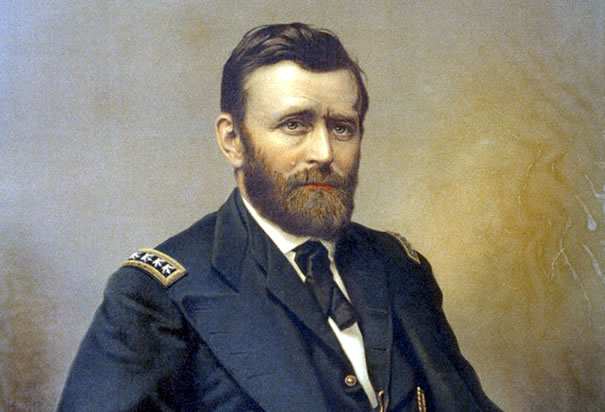
Ulysses S. Grant, Veteran

THE 4TH OF MARCH, 1861, came, and Abraham Lincoln was sworn to maintain the Union against all its enemies. The secession of one State after another followed, until eleven had gone out. On the 11th of April Fort Sumter, a National fort in the harbor of Charleston, South Carolina, was fired upon by the Southerners and a few days after was captured. The Confederates proclaimed themselves aliens, and thereby debarred themselves of all right to claim protection under the Constitution of the United States. We did not admit the fact that they were aliens, but all the same, they debarred themselves of the right to expect better treatment than people of any other foreign state who make war upon an independent nation. Upon the firing on Sumter President Lincoln issued his first call for troops and soon after a proclamation convening Congress in extra session. The call was for 75,000 volunteers for ninety days’ service. If the shot fired at Fort Sumter “was heard around the world,” the call of the President for 75,000 men was heard throughout the Northern States. There was not a state in the North of a million of inhabitants that would not have furnished the entire number faster than arms could have been supplied to them, if it had been necessary.

As soon as the news of the call for volunteers reached Galena, posters were stuck up calling for a meeting of the citizens at the court-house in the evening. Business ceased entirely; all was excitement; for a time there were no party distinctions; all were Union men, determined to avenge the insult to the national flag. In the evening the court-house was packed. Although a comparative stranger I was called upon to preside; the sole reason, possibly, was that I had been in the army and had seen service. With much embarrassment and some prompting I made out to announce the object of the meeting. Speeches were in order, but it is doubtful whether it would have been safe just then to make other than patriotic ones. There was probably no one in the house, however, who felt like making any other. The two principal speeches were by B. B. Howard, the post-master and a Breckinridge Democrat at the November election the fall before, and John A. Rawlins, an elector on the Douglas ticket. E. B. Washburne, with whom I was not acquainted at that time, came in after the meeting had been organized, and expressed, I understood afterwards, a little surprise that Galena could not furnish a presiding officer for such an occasion without taking a stranger. He came forward and was introduced, and made a speech appealing to the patriotism of the meeting.

After the speaking was over volunteers were called for to form a company. The quota of Illinois had been fixed at six regiments; and it was supposed that one company would be as much as would be accepted from Galena. The company was raised and the officers and non-commissioned officers elected before the meeting adjourned. I declined the captaincy before the balloting, but announced that I would aid the company in every way I could and would be found in the service in some position if there should be a war. I never went into our leather store after that meeting, to put up a package or do other business.

The ladies of Galena were quite as patriotic as the men. They could not enlist, but they conceived the idea of sending their first company to the field uniformed. They came to me to get a description of the United States uniform for infantry; subscribed and bought the material; procured tailors to cut out the garments, and the ladies made them up. In a few days the company was in uniform and ready to report at the State capital for assignment. The men all turned out the morning after their enlistment, and I took charge, divided them into squads and superintended their drill. When they were ready to go to Springfield I went with them and remained there until they were assigned to a regiment.   

There were so many more volunteers than had been called for that the question whom to accept was quite embarrassing to the governor, Richard Yates. The legislature was in session at the time, however, and came to his relief. A law was enacted authorizing the governor to accept the services of ten additional regiments, one from each congressional district, for one month, to be paid by the State, but pledged to go into the service of the United States if there should be a further call during their term. Even with this relief the governor was still very much embarrassed. Before the war was over he was like the President when he was taken with the varioloid: “at last he had something he could give to all who wanted it.”
From the Personal Memoirs of Ulysses S. Grant, Chapter 17
Image source: History.com